Education
Dental Website Design: Why Beautiful Isn't the Same as Booked

- Conversion and compliance are not a trade off. Practices that get dental websites wrong are usually optimising for only one of the two.
- The test is whether a patient can book in under thirty seconds without thinking hard: booking action visible without scrolling on every page, a tappable phone number, and trust signals sitting beside the call to action rather than on a buried About page.
- Fewer choices convert better. Fifteen services with equal visual weight makes a nervous visitor do the triage work before they can act.
- Design does not persuade Google your dentistry is good, but it affects whether Google can rank you at all. Page experience is a tie breaker between otherwise similar local competitors.
- Three things usually break Core Web Vitals on dental sites: unoptimised hero images, pop-up booking widgets that shift layout, and third-party chat or review widgets that block interactivity. All three are fixable without touching the design.
- A website is advertising under the National Law. Testimonials and before and after imagery are where website design gets caught.
- A gallery template that lets each dentist upload mismatched angles and lighting is a compliance risk baked into the design, not a content problem to fix later.
- What makes a dental website actually convert?
- Does website design actually affect search ranking?
- Which AHPRA rules apply to dental website design and content?
- What technical foundations does a compliant, high converting site need?
- How should a dental website be structured for both patients and search?
- Frequently asked questions
- References
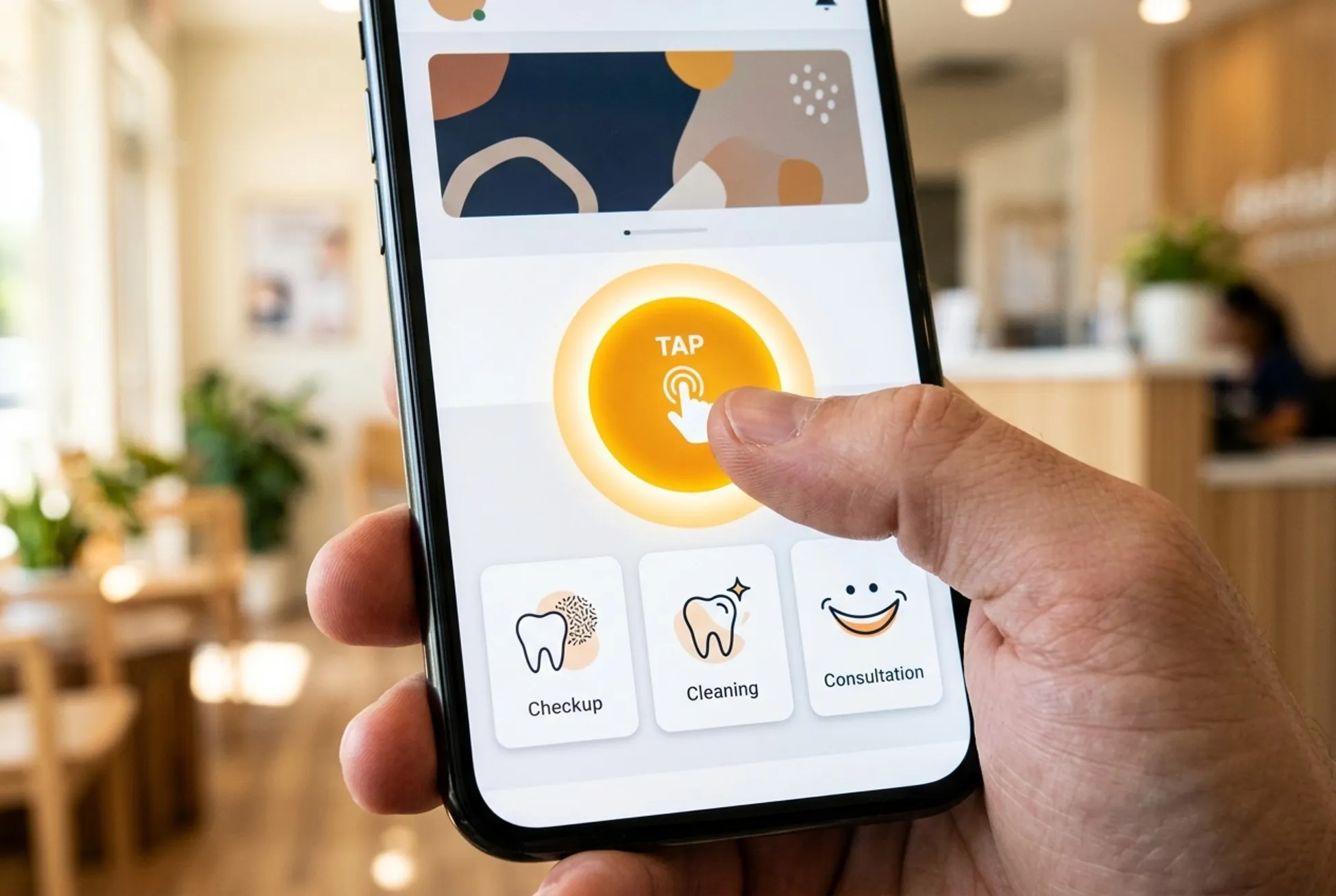
A beautiful dental website that takes six seconds to load on a phone, buries the booking button in a dropdown, and quietly breaches AHPRA's testimonial rules is not a marketing asset. It is a liability that happens to look nice. Most practices treat dental website design as a design decision and hand it to whoever built their last brochure or restaurant site, and most of those designers have never heard of a testimonial rule, let alone a before and after photo condition. The result is a site that photographs beautifully in a pitch deck and quietly costs the practice bookings, or worse, sits one complaint away from a regulator's attention. Getting both halves right, a site that turns a nervous patient into a booking within seconds and one that stands up to AHPRA scrutiny, is not actually a trade off. The practices that get it wrong are usually optimising for only one of the two.
What makes a dental website actually convert?
Conversion on a dental site comes down to one question answered fast: can this person book an appointment in under thirty seconds without thinking hard about it?
The booking action needs to be visible without scrolling, on every page, not tucked into a hamburger menu. A phone number that is tappable, not just printed as text, matters enormously for mobile visitors, since most dental searches happen on a phone in a moment of discomfort rather than at a desk browsing casually. Trust signals need to sit near that booking action rather than scattered through the site: practitioner photos and real credentials, health fund logos, and years serving the local area all do more work placed beside the call to action than buried on an About page three clicks deep.
Fewer choices convert better than more. A homepage offering fifteen services with equal visual weight forces a nervous visitor to work out what they need before they can act, and this rule holds across medical website design generally, not just dental. Structuring the site around a small number of clear entry points, general checkups, emergency care, cosmetic work, gets people to the right page and the booking button faster.
Does website design actually affect search ranking?
Yes, though not in the way most practices assume. Design does not directly persuade Google your dentistry is good, but it directly affects whether Google can rank you at all.
Google's own page experience documentation states plainly that there is no single ranking signal, but Core Web Vitals and other page experience factors, including mobile friendliness, HTTPS security and the absence of intrusive interstitials, do influence how pages compete against each other. The practical read is that page experience rarely lifts a weak page above a genuinely stronger competitor, but it is a real tie breaker between practices whose content and reputation are otherwise similar, which describes most local dental competition.
For a dental site specifically, three things tend to break Core Web Vitals: unoptimised hero images on the homepage, pop up booking widgets that shift page layout as they load, and third party chat or review widgets that block the page from becoming interactive. All three are fixable without touching design at all, which is exactly why they get missed. A site can look identical before and after a performance pass and convert meaningfully better.
Which AHPRA rules apply to dental website design and content?

Every rule that applies to any other dental advertising applies here too, since a website is advertising under the National Law the same way a Google ad or a brochure is.
The two areas that catch website design specifically are testimonials and before and after imagery. Ahpra's advertising guidelines define a testimonial as a positive statement about the clinical aspects of a service, meaning a specific symptom, treatment or outcome, or praise of the practitioner's skill. A dedicated testimonials page quoting patients on how their smile transformed after veneers is a textbook breach, even if every word quoted is genuine and the patient consented. Comments about customer service or wait times are not testimonials and can appear safely, but the line sits exactly where the comment turns clinical.
Before and after galleries need particular care in the design brief itself, not just the copy. The guidelines note that before and after images are less likely to be misleading if they are consistent in content, camera angle, background, framing, exposure, posture, lighting and contrast, with the treated feature the only visible change between the two shots. A gallery template that lets each dentist upload mismatched angles and lighting is a compliance risk baked into the design, not just a content problem to fix later. The same guidelines are explicit that offers, discounts or bundles displayed on a website need their terms and conditions stated or linked clearly, not buried in fine print a visitor has to hunt for.
The obligations described here sit under the Health Practitioner Regulation National Law and Ahpra's advertising guidelines, and they change. How they apply turns on your specific pages, images and offer wording, so have AHPRA's testimonial rules and the before and after conditions checked against your actual build by a qualified adviser before the site goes live, not after.
What technical foundations does a compliant, high converting site need?

Mobile responsiveness is not optional for dental, it is closer to a majority use case, since most searches for urgent dental problems happen on a phone. Any website conversion rate optimisation work should start here, since a slow or cramped mobile experience caps every other improvement you make afterwards.
HTTPS security is a baseline expectation now, both for Google's ranking systems and because a site collecting names, phone numbers and appointment requests without it looks unprofessional to any visitor who checks. Page speed deserves a specific target rather than a vague aspiration: aim for a homepage that becomes interactive in under three seconds on mobile, since abandonment climbs sharply past that point for a visitor who is already anxious about a dental problem. Accessible forms matter too, since a booking form should work cleanly with screen readers and require the fewest fields possible; every extra field is a chance for a nervous visitor to give up.
How should a dental website be structured for both patients and search?
Structure the site around what a patient is actually trying to do, then let search structure follow naturally from that.
A clear service page for each major offering, general dentistry, emergency care, cosmetic dentistry, orthodontics, gives both patients and Google a specific page to land on rather than forcing everything through a thin homepage. Location pages matter for multi-site practices, each with its own address, phone number and embedded map, so Google can confirm exactly where each clinic sits. Schema markup for dental practice and local business data gives Google structured confirmation of your name, hours and services rather than making it infer this from prose, which supports the same local ranking work covered in local SEO for dentists. None of this needs to sacrifice design quality. Compliance and conversion are not competing goals here, they are the same goal approached from two directions: remove friction for the anxious patient trying to book, and remove risk for the practice that is advertising a regulated health service while doing it.
A dental website is not a brochure you publish once and forget. It is closer to a member of staff who works around the clock, and like any staff member, it needs both good manners with patients and a clear understanding of the rules it operates under.
If you want a dental website built to convert nervous patients into bookings while staying inside AHPRA's rules from the first wireframe, talk to ContentClicks. We build sites that pass both the patient test and the compliance test.
Frequently asked questions
How much should a compliant dental website cost?
Cost varies with the number of locations, service pages and custom features required, but a genuinely compliant site needs a legal and design review of testimonials, before and after content and offer terms built into the process, not added afterwards, so budget for that review as a line item rather than an afterthought.
Can a dental website show patient testimonials at all?
Only if they avoid any clinical content. Comments praising friendliness, wait times or the booking experience are permitted, while any statement referencing a symptom, treatment or outcome is treated as a testimonial and cannot be used to advertise the practice.
Does a slow website really lose patients, or is that overstated?
It is not overstated for dental specifically, since a large share of visitors arrive through an urgent, phone based search and abandon quickly if the page does not load and respond fast, particularly compared with a competitor's site that does.
Should every dental practice have a separate mobile site?
No. A single responsive site that adapts to any screen size is the current standard and performs better for search than maintaining a separate mobile version, which Google's page experience systems no longer favour.
This article is general information only, not legal or regulatory advice. Advertising a regulated health service in Australia is governed by the Health Practitioner Regulation National Law together with Ahpra's Guidelines for advertising a regulated health service, which set the requirements for testimonials, before and after imagery and the terms attached to any offer. These apply to your specific circumstances and change over time. Before launching or amending a dental website, confirm your obligations with a qualified adviser.
References
- Ahpra. (2020). Guidelines for advertising a regulated health service. ahpra.gov.au
- Google. (2026). Understanding Google Page Experience. Google Search Central. developers.google.com
- Google. (2026). Guidelines for representing your business on Google. Google Business Profile Help. support.google.com
- Barry Nilsson. (2023). The cosmetic surgery industry's facelift: a before and after comparison of the new laws and guidelines. bnlaw.com.au
About the author
Dr Sandy Adel · Content Strategist, ContentClicks
Sandy is a practising dentist with a Bachelor of Dentistry from Alexandria University and over eight years of clinical experience in general dentistry. She brings that firsthand clinical knowledge directly to her writing, so the content she produces for dental and medical audiences is accurate at the clinical level before it is optimised for anything else. Before joining ContentClicks she spent more than four years writing dental copy for practices across the Australian, US and UK markets, including two years as a dental copywriter at one of Australia's specialist healthcare marketing agencies. She writes about ethical marketing, realistic patient expectations, and the gap between what clinics promise and what biology can guarantee. More from Sandy.