July 20, 2026 · 12 min read
Your chairs are booked solid some weeks and quiet others. You know social media should help with that. But between running the practice and treating patients, posting keeps sliding to the bottom of the list. Then when you finally do post, it can feel like shouting into an empty room.
Here is the part most dentists miss. Social media is not a billboard. It is the place where people decide whether they trust you enough to hand over their mouth. Get dental social media marketing right and it becomes one of the most cost effective ways to bring new patients in and keep the ones you already have. Get it wrong, or ignore the rules that apply to you as a registered health practitioner, and it can cost you more than it earns.

Why does social media matter for your dental practice?
Most people looking for a dentist check you out online before they ever pick up the phone. They land on your social media pages to get a feel for who you are, what your practice looks like, and whether it seems like somewhere they would feel comfortable. A practice with dormant accounts and no recent posts reads as either closed or careless. Neither one wins the booking.
A strong social media presence pulls its weight in a few ways. The obvious one is online visibility, so you turn up when local patients are looking. Less obvious is credibility. Seeing a real dental team, a tidy surgery and clear answers to common questions makes a nervous patient feel safer. It also opens two way communication, so a potential patient can ask a quick question in the comments instead of talking themselves out of booking.
Retention matters too. Existing patients who follow you are reminded you exist between visits. A post about caring for a new crown, or a note that a new hygienist has joined, keeps your practice front of mind and encourages loyalty. Social media is rarely the single reason someone books, but it is often what tips them over the line.
Which social media platforms should your dental clinic focus on?
You do not need to be on every platform, just the ones your target audience actually uses. Your patient demographics tell you which those are.
The numbers make a strong case for showing up. ACMA research shows that nearly all Australians, around 98 per cent, use at least one social media or communication app, Facebook remains the most used platform at roughly 78 per cent of adults, and YouTube reaches about 70 per cent. For a suburban practice reaching local patients across a wide age range, Facebook is usually the anchor. It skews slightly older, which lines up with the people booking check ups, implants and other higher value dental procedures.
Instagram is your visual platform. It rewards high quality photos and visual storytelling, which suits educational visuals, a look inside your rooms and short quick tips. Younger audiences lean toward short form video apps like TikTok, so if your dental business speaks to teens, students or young families, a light presence there can earn its keep. YouTube deserves a spot for longer educational videos that explain procedures and answer the questions patients are often too shy to ask in the chair.
Pick two social platforms and do them properly rather than spreading yourself thin across five. Consistency on two beats neglect across all of them.

Marketing Audit
Scorecard
Score your clinic's marketing strategy across 10 criteria. See where you stand against 2026 standards.
- Digital presence score
- Content strategy rating
- Patient acquisition assessment
- Compliance and reputation check
- Future readiness rating
Get the free scorecard
One email.
One PDF. Instant.
Enter your email and we'll send it straight to you.
By submitting your email address you agree to join our newsletter. One click to unsubscribe, anytime.
On its way to your inbox
Check your email — the PDF should arrive within a couple of minutes. Keep reading while you wait.
Download now insteadWhat can you post, and what does AHPRA prohibit?
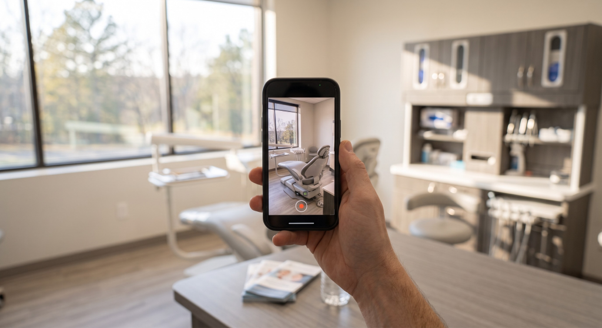
This is where dental social media marketing parts ways with marketing a cafe or a gym. As a registered dental professional, your social media posts count as advertising of a regulated health service, including the ones you never paid to boost. The same rules cover a casual Instagram caption and a paid ad.
The biggest trap is one that works everywhere else and is off limits here.
The testimonial trap
Under the National Law, AHPRA prohibits testimonials about the clinical aspects of a regulated health service in advertising. That sweeps up reviews and patient success stories about treatment, outcomes or your clinical skill, whether they sit on your website, your social media pages or a boosted post. It even extends to replying to a clinical review in a way that repeats it. If your pages have a reviews feature switched on, you are responsible for managing it, and switching it off is often safest. This is the opposite of what works in most industries, where patient stories build emotional connection, so it catches plenty of practices out.
Content that works instead
The good news is that the content patients respond to most is also the content that keeps you compliant. Educational content is your strongest asset. Sharing oral health tips, explaining common dental services and answering the questions real patients ask positions your practice as a trusted resource and educates patients before they book. Behind the scenes content earns its place too, because showing your dental team as real people humanises the practice and builds familiarity. Practice updates, community involvement and general oral health education give you endless things to post without touching a prohibited claim. You can still show expertise through anonymised, consent based case education, highlight your qualifications and talk clearly about the specific services you offer. However, if you are showing results for aesthetic procedures like dental veneers, you must strictly adhere to the September 2025 Ahpra Cosmetic Guidelines. This means using unaltered 'before and after' photos with identical lighting, displaying the 'before' image first, stating exactly how long post-procedure the 'after' photo was taken, and including a prominent warning that individual results vary.
How do you protect patient privacy when sharing content?

Every time a patient appears in your content, privacy law comes into play. Health information is sensitive information under the Privacy Act, and the OAIC health privacy guide makes clear you need a patient's express consent before you use or share it for a new purpose such as dental marketing. A photo of a patient, a story about their treatment, even a recognisable face in the background of a video, all count.
Get written, specific consent before anything featuring a real patient goes live, and spell out where it will appear and how long it will stay up. Proper consent protects the patient and shields your registration and your practice from a complaint that could undo years of goodwill. When in doubt, leave the patient out and post the educational point on its own.
What does a strong dental social media strategy look like?
A good social media strategy for a dental clinic balances two jobs, educating patients and building community. Lean too hard on promotion and people tune out. Give them genuinely useful content and the trust follows.
Aim for a simple content mix that rotates between educational posts and short videos answering common questions, a bit of team culture and the odd behind the scenes moment, and practice news that ties you to your local community. When you share oral health advice, anchor it to trusted information such as the ADA public oral health resources so what you tell patients is accurate and current.
Video is worth leaning into, because engaging videos generally get more reach and interaction than text only posts. They do not need to be polished. A phone, decent light and a clear thirty second explanation of a procedure beats a stock photo every time.
Post consistently, a few times a week, rather than in bursts followed by long silences. Use the scheduling tools built into most platforms so a hectic clinical week does not become a quiet social one. Reply quickly to comments and messages, because a fast, friendly response is often what turns a curious follower into a booked appointment. Then watch your numbers. The analytics built into each platform show which posts land, so review your insights regularly and do more of whatever your engagement rates reward.
If posting consistently keeps slipping while you focus on patients, that is exactly the sort of thing we take off your plate. Talk to the ContentClicks team about a compliant dental social media plan built around your practice.
Frequently asked questions
Can dentists use patient reviews in their marketing in Australia?
Not when they touch clinical care. AHPRA prohibits patient testimonials about treatment, outcomes or clinical skill in advertising, and your social media counts as advertising. Reviews on platforms you do not control are treated differently, but anything you publish or boost yourself must steer clear of clinical testimonials.
How often should a dental practice post on social media?
Consistency matters more than volume. A steady rhythm of a few posts each week, kept up over months, builds far more trust and visibility than a flurry of posts followed by weeks of silence.
Which platform is best for a dental clinic?
For most Australian practices, Facebook is the dependable anchor for reaching local patients across age groups, with Instagram close behind for visual content. Add TikTok or YouTube only if they genuinely suit your audience and you can keep them active.
Is social media marketing worth it for a small dental practice?
Yes. It is one of the more cost effective ways to build online visibility, strengthen your online reputation and stay connected to existing patients. The real investment is consistency and care with the rules, not a large budget.
Do I need consent to post a patient photo?
Yes. Health information is protected under the Privacy Act, so you need express, informed consent before sharing anything that identifies a patient, including photos and treatment stories.
This blog offers general information about marketing a dental practice and does not constitute legal, regulatory or professional advice. Advertising obligations for registered health practitioners are set by AHPRA and the National Law, and privacy obligations by the Privacy Act; requirements change over time and apply to your specific circumstances. Before publishing patient content or claims about treatment, confirm your obligations with the current AHPRA guidelines and, where needed, your own professional or legal adviser.
References
- Australian Communications and Media Authority. (2024). ACMA research reveals media and communications trends. https://www.acma.gov.au/articles/2024-12/acma-research-reveals-media-and-communications-trends
- Australian Health Practitioner Regulation Agency. (2025). Guidelines for advertising a regulated health service. https://www.ahpra.gov.au/Resources/Advertising-hub/Advertising-guidelines-and-other-guidance/Advertising-guidelines.aspx
- Office of the Australian Information Commissioner. (2025). Guide to health privacy. https://www.oaic.gov.au/privacy/privacy-guidance-for-organisations-and-government-agencies/health-service-providers/guide-to-health-privacy

About the author
Dr Sandy Adel · Content Strategist, ContentClicks
Sandy is a practicing Dentist who also works at ContentClicks producing amazing content for our Customers and our Website. She received her Dental credentials from the Alexandria University and brings with her a wealth of knowledge from over eight years of clinical experience, and four years of copywriting, including for major Australian marketing groups. More from Sandy.