July 1, 2026 · 12 min read
Running a modern dental clinic involves a delicate, highly demanding balancing act. On one hand, there is the continuous commercial drive to attract new patients through digital marketing, search engine visibility, and local community outreach. On the other hand, the true heartbeat of any thriving dental practice lies in its quiet ability to keep its current community fully intact. The ultimate long-term growth of your clinic is determined far less by the initial influx of people through your front doors and far more by how many of them choose to return year after year.
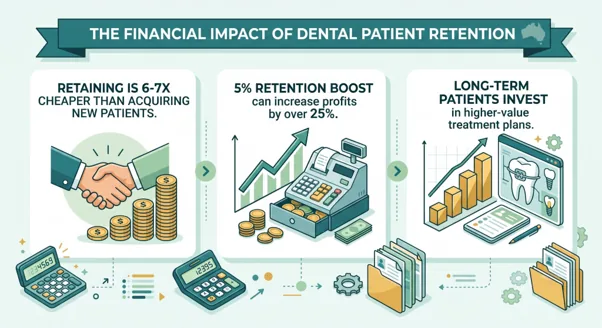
Focusing heavily on comprehensive dental patient retention strategies is one of the most commercially sound decisions a clinic director can make. Keeping a patient is far cheaper than winning a new one. Depending on the study and the industry, acquiring a new customer can cost five to 25 times what it takes to retain an existing one. The upside of loyalty is just as well documented: across industries, Bain & Company found that lifting retention by 5% can increase profits by anywhere from 25% to 95%. For a practice, that gap shows up every time a patient books their next check-up instead of drifting to the clinic down the road.
Patient retention is what makes a practice financially stable. When patients stay for years, they move from one-off emergency visits to higher-value preventive and elective care, giving you a predictable flow of appointments to forecast and plan around. High churn does the opposite: it puts you on a treadmill, spending constantly on marketing just to hold your numbers steady. Loyal patients also refer others, and those referrals convert at a higher rate because the trust is already there before the new patient walks in.
Why Keeping Your Existing Patients Matters More Than Chasing New Ones
The everyday economics of dental clinic management are frequently misunderstood by growing teams. It is incredibly easy to get caught up in the superficial excitement of welcoming a high volume of new patients each month. Yet, the true financial engine of an established practice is patient lifetime value. This metric doesn't just calculate immediate transaction revenue; it represents the long-term potential for collaborative care.
Dental Economics research indicates that successful practices prioritise patient lifetime value, ensuring sustainable practices. Patient attrition can silently erode the progress of a thriving dental practice. When a dental patient feels connected to a consistent team of professionals who understand their unique oral health needs, they are less likely to switch practices or delay critical interventions. Keeping patients engaged is about building an ecosystem where they value their own dental health and respect the partnership with your clinic, creating a long-term patient relationship that is both clinically effective and financially sound. Measuring patient retention with analytical rigour is essential for proactive management, allowing you to optimise loyalty programs and identify which dental care strategies are truly effective.
The Human Element: First Impressions and In-Chair Comfort
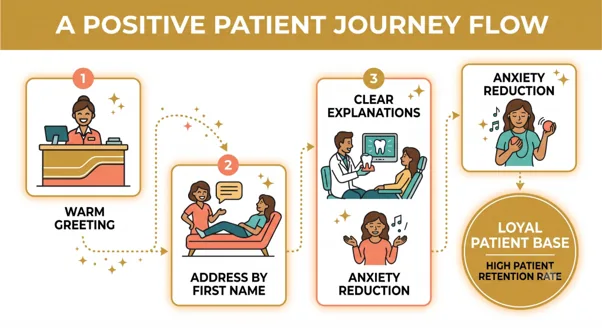
Long before a clinical tool touches a tooth, the patient experience has already begun. Patients notice how they're treated during visits, from the precise second they step across your clinic's threshold to the moment they leave. A warm greeting can enhance patient experience significantly, transforming an inherently stressful clinical visit into an environment of profound safety and comfort. When a patient arrives, the front desk team must set a welcoming environment that disarms the common anxieties associated with oral health care, from cost-effective options to clinical procedures.
Small Details, Massive Impact
Simple adjustments in interpersonal dynamics cost nothing but yield incredible rewards for patient loyalty. Addressing patients by name improves their experience significantly, making them feel recognised as unique individuals rather than just numbers on a spreadsheet. In an era where healthcare can feel impersonal, this level of respect and recognition ensures that patients feel valued from the very outset of their appointment.
Mitigating Clinical Fear and Fostering Support
Dental anxiety remains a primary barrier, causing many patients to leave practices or dangerously delay necessary treatment. Cultivating empathetic, engagement-focused care reduces dental anxiety, making the crucial difference between a patient who vanishes after one appointment and one who remains committed to their lifelong oral health needs. During the clinical session, consistent communication must remain open and transparent. Patients should receive clear explanations during procedures, eliminating the fear of the unknown that fuels discomfort. When dental professionals take the time to answer patient concerns thoughtfully, patients feel heard and supported throughout their entire care journey. This human tone builds the lasting impression required for sustained practice growth.
Harnessing Technology to Streamline the Patient Experience
In 2026, clinical excellence must be paired with frictionless administrative workflows. Modern practice management systems automate appointment reminders and follow-ups, taking the burden of manual administrative coordination off your busy front desk staff. This optimisation allows the dental team to focus more of their energy on direct, personalised patient interaction, improving the overall quality of care and keeping patients engaged.
Seamless Communication Ecosystems and Reduced No-Shows
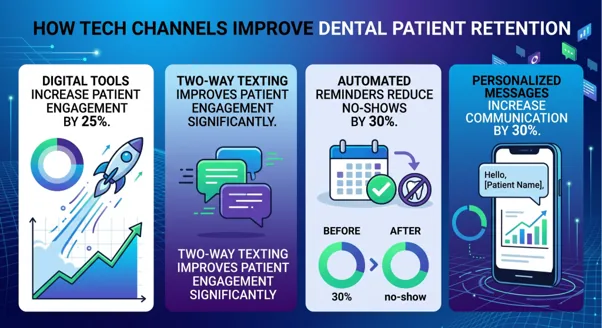
Digital communication tools give you a direct line to patients between visits, and the payoff shows up in the data. One study of doctor-patient communication found that using digital platforms raised patient engagement by 30%. Most patients would rather get a reminder by text or email than field a phone call in the middle of a workday. Meet them on the channel they already use, and they are more likely to stay.
Implementing two-way texting improves patient engagement significantly, allowing individuals to quickly confirm, reschedule, or ask brief questions regarding their upcoming visits. Data from a published healthcare communication study demonstrates that automated reminders can meaningfully reduce patient no-shows, with the effect growing depending on the cadence and personalisation of the messages. Furthermore, personalised messages tend to lift communication engagement well above generic templates, which often fail to capture the modern consumer's attention. Consistent communication via digital tools helps many patients remain compliant with their care plans.
Frictionless Digital Scheduling and Comfort
The modern lifestyle demands absolute convenience. Giving individuals the power to coordinate their care at midnight from their smartphones is an essential element of modern patient engagement. Findings from a digital scheduling systems report show that online scheduling can reduce appointment cancellations, because patients can intentionally choose slots that perfectly align with their personal calendars, work, and family commitments.
Flexible online appointment management increases patient convenience, ensuring that your clinic remains accessible outside traditional operating hours. When a dental clinic introduces frictionless scheduling, it enhances patient satisfaction and effectively removes the subtle barriers that cause people to delay scheduling their routine maintenance or essential dental treatment.
Hyper-Personalisation: Moving Beyond the Clinical Chart
Every clinic records clinical data, but successful practices understand that the human elements behind those charts are what inspire patient loyalty. Building trust through personalisation is crucial for patient loyalty. Patients prefer tailored conversations based on their preferences, whether those preferences relate to their clinical history, their communication style, or their lifestyle needs. Retain dental patients by making every touchpoint unique.
Fostering Deeper Connections and Providing Context
Personalised care fosters long-term patient relationships. When your team can recall a small detail about a patient's life, a family member, or a hobby, it signals that the relationship is genuinely valued. Personalised communication increases patient engagement and trust, transforming a dry clinical transaction into a collaborative healthcare partnership. Sharing educational content or patient testimonials based on their specific interest in a procedure like cosmetic dentistry or implants provides context that helps keep patients committed to their journey.
Celebrating Milestones Beyond Dentistry
Extending your communication beyond routine clinical reminders helps build an unbreakable bond. Sending birthday messages can strengthen patient relationships, reminding people that your team cares for them even when they are not sitting in the clinical chair. Similarly, celebrating patient milestones can strengthen relationships, whether that means acknowledging a child's high school graduation, a major career achievement, or ten years of continuous care with your clinic. These touchpoints turn everyday dental treatment providers into indispensable pillars of the community, where patients from all walks of life feel recognised.
Clinical Convenience and Proactive Preventive Care
Clinical convenience is essential for patient retention in dental practices. If a clinic makes it difficult for a patient to complete their routine care, that patient will eventually seek a clinic that respects their time and offers smooth operational flows. Efficient scheduling minimises wait times and retains patients who cannot afford to lose half a day sitting in a reception lounge. Personalised treatment plans are key, but must be supported by convenient clinical operations.
The Power of Routine Maintenance and Patient Education
Dental practices improve patient retention through proactive recall systems that keep patients committed to their preventive care schedules. To maintain premium oral health and protect the structural integrity of previous treatments, patients are generally encouraged to attend hygiene visits on a regular schedule appropriate to their needs.
As the American Dental Association reports, consistent preventive care forms the cornerstone of lifelong oral health and minimises emergency occurrences. By framing these visits as essential preventive care rather than optional luxuries, you educate patients on the value of consistent upkeep. Consistent communication ensures that individuals understand how regular cleanings prevent the development of painful, costly conditions down the road. Through structured patient education, your client base shifts from being reactive emergency seekers to proactive guardians of their own dental health, maximising their patient lifetime value and creating a loyal patient base.
Overcoming Financial Barriers and Reducing Anxiety
Financial ambiguity is one of the most common reasons patients leave or fail to follow through with recommended dental care. Financial anxiety delays patient care and drives them to switch practices, as patients often assume that another clinic might be more affordable or upfront about costs, sometimes looking for more cost-effective solutions.
Eliminating the Surprise Factor with Transparency
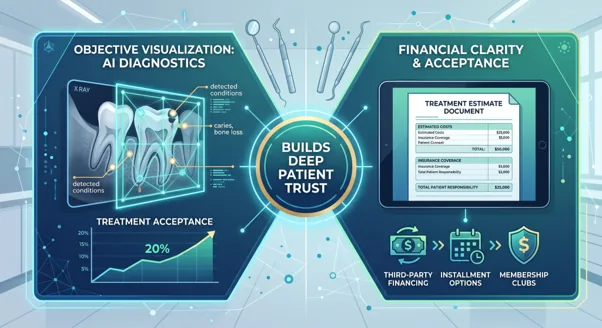
To counteract this trend, transparent pricing reduces patient anxiety and encourages care. Clinics should provide clear, upfront treatment estimates that reduce patient financial anxiety, outlining exactly what insurance covers and what out-of-pocket responsibilities remain. When patients feel fully informed, they are far more likely to proceed with necessary interventions. This level of clarity eliminates the surprise factor, reducing overall stress and building confidence in the dental clinic. Effective communication on costs helps satisfied patients drive referrals, as they can accurately describe your transparent billing practices.
Innovative Diagnostic Tools and Flexible Payments
Technology plays an incredible role in improving treatment transparency and trust. AI-assisted diagnostics can improve treatment acceptance because they provide clear, objective visual evidence that helps patients understand the precise reality of their oral health needs. When a patient can clearly see an objective analysis of an emerging cavity or structural fracture on a screen, their scepticism dissolves.
Studies indexed by the National Center for Biotechnology Information confirm that clear visual proof increases a patient's confidence in diagnostic accuracy. To complement this visual clarity, offering flexible payment options can increase patient acceptance of treatment plans. Providing third-party financing, instalment options, or internal membership clubs ensures that high-value treatments remain accessible, keeping patients committed to their care plans within your practice. Effective practice management systems can also help manage payment plans, contributing to a thriving dental practice.
Creating a Feedback Loop That Drives Excellence
You cannot fix a problem if you do not know it exists. To accurately gauge patient satisfaction, clinics must actively seek out the perspectives of those they serve. Asking for feedback demonstrates that patient opinions matter, creating an environment where patients feel heard and valued.
Capturing In-the-Moment Insights and Locating Areas for Improvement
Collecting immediate patient feedback improves service quality by capturing a patient's thoughts while the experience is completely fresh in their mind. Post-appointment surveys help identify issues early, allowing management to intervene before minor frustrations turn into permanent patient churn. Feedback forms help locate areas for improvement in services, highlighting if a particular team member needs additional customer service training or if the wait times are becoming unmanageable. Many patients will only provide direct feedback if explicitly asked, making proactive feedback forms an essential element of modern dental patient retention strategies.
Managing Your Digital Reputation and Leaving Positive Reviews
In our interconnected world, internal feedback must be mirrored by public engagement. When patients have an exemplary experience, encourage them to leave positive reviews on platforms like Google or Facebook. These online reviews are the lifeblood of practice growth. However, managing reviews requires a highly proactive stance. Publicly addressing online reviews shows commitment to satisfaction, proving to both the reviewer and to potential patients that you take accountability seriously. By responding gracefully to both positive reviews and occasional constructive critiques, you show the world that your clinic is dedicated to continuous improvement and keeping patients engaged.
Incentivising Loyalty and Word-of-Mouth Advocacy
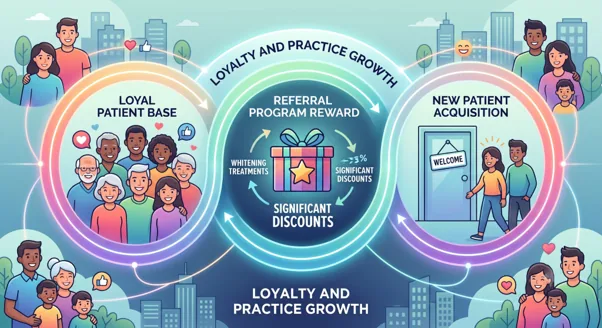
Human behaviour responds incredibly well to positive reinforcement. If you want to cultivate a highly loyal patient base, you must create structured mechanisms that celebrate and reward that loyalty. Loyalty programs can significantly enhance patient retention and referrals by gamifying or acknowledging the ongoing relationship between the patient and the clinic. Referral programs can incentivise patient recommendations, motivating your happiest patients to actively champion your brand to friends, family, and colleagues, bringing in a steady flow of new patients. Satisfied patients leave positive reviews and drive referrals, making word-of-mouth referrals incredibly powerful for any thriving dental practice. Retaining patients ensures that they become reliable referrers for your dental clinic.
Measuring Your Success: Tracking the Metrics That Count
A retention strategy relies completely on data accuracy. Moving away from guesswork means using precision metrics rather than simply tracking your total active patients, a figure that varies wildly across different practice management systems. Instead, clinics must focus on measuring patient retention with analytical rigour to see how many individuals are genuinely committed to your care.
As highlighted by macroeconomic customer loyalty metrics, tracking micro-retention performance provides the predictive clarity needed to maximise clinical profitability. Your most critical indicator is the patient retention rate, which calculates the exact percentage of people returning for care within a twelve-month window.
Monitoring patient churn and patient attrition reveals precisely when and why people leave, showing whether they drop off after an initial filling or miss their second hygiene visit. Recognising these behavioural trends allows you to deploy targeted clinical interventions. Because effective communication can meaningfully reduce patient attrition, a robust digital communication strategy is an incredibly cost-effective investment for long-term practice growth. To deploy these automated tools and optimise your outreach, you can partner with ContentClicks to streamline your systems and keep your patient community intact.
Frequently Asked Questions
How often should patient retention metrics be reviewed?
Dental clinics should analyse their patient retention rate and patient churn metrics on at least a quarterly basis. Reviewing these data points every three months allows practice management to spot drop-off patterns early and protect long-term patient relationships.
What is the most effective way to reduce patient no-shows?
Implementing multi-channel automated appointment reminders through digital communication tools is one of the most effective ways to reduce patient no-shows. Combining online scheduling with two-way text confirmation options can meaningfully cut missed appointments, with results improving the more personalised and well-timed the reminders are.
Can loyalty programs work effectively in a clinical dental environment?
Ethically structured loyalty programs can be highly effective and can enhance patient retention and referrals. Successful programs reward existing patients for adhering to their preventive care schedules rather than offering transactional discounts on regulated health services.
How does upfront financial transparency impact patient loyalty?
Clear, upfront treatment estimates reduce patient financial anxiety and help prevent the patient attrition caused by unexpected costs. Providing transparent pricing builds deep professional trust, encouraging patients to confidently accept their personalised treatment plans.
What should a clinic do when a patient decides to leave the practice?
When a dental patient leaves, send a polite, non-defensive feedback form to understand their departure and locate areas for service improvement. Publicly and privately addressing patient concerns demonstrates your commitment to patient satisfaction and helps protect future relationships.
This blog offers general information and does not replace professional dental advice. Any surgical or invasive procedure carries risks; before proceeding, you should seek a second opinion from an appropriately qualified health practitioner. Any clinic loyalty or referral programs mentioned are subject to terms and conditions and focus strictly on routine preventive care, not the unnecessary use of regulated health services.
References
- American Dental Association. (2024). Managing the patient lifecycle and practice health. https://www.ada.org/
- Levin, R. P. (2025). Data-driven protocols for modern dental practice growth. Dental Economics. https://www.dentaleconomics.com/
- Reichheld, F. F., & Sasser, W. E., Jr. (1990). Zero defections: Quality comes to services. Harvard Business Review, 68(5), 105–111. https://hbr.org/2014/10/the-value-of-keeping-the-right-customers
- (2025). Bridging the digital divide: Enhancing doctor-patient communication through digital media platforms. Journal of Education and Health Promotion, 14(1). https://journals.lww.com/jehp/fulltext/2025/10310/bridging_the_digital_divide__enhancing.423.aspx
- Hasvold, P. E., & Wootton, R. (2011). Use of telephone and SMS reminders to improve attendance at hospital appointments: a systematic review. Journal of Telemedicine and Telecare / PubMed Central. https://pmc.ncbi.nlm.nih.gov/articles/PMC3188816/
- Zhao, P., Yoo, I., Lavoie, J., Lavoie, B. J., & Simoes, E. (2017). Web-Based Medical Appointment Systems: A Systematic Review. Journal of Medical Internet Research / PubMed Central. https://pmc.ncbi.nlm.nih.gov/articles/PMC5511043/

About the author
Dr Sandy Adel · Content Strategist, ContentClicks
Sandy is a practicing Dentist who also works at ContentClicks producing amazing content for our Customers and our Website. She received her Dental credentials from the Alexandria University and brings with her a wealth of knowledge from over eight years of clinical experience, and four years of copywriting, including for major Australian marketing groups. More from Sandy.