July 14, 2026 · 12 min read
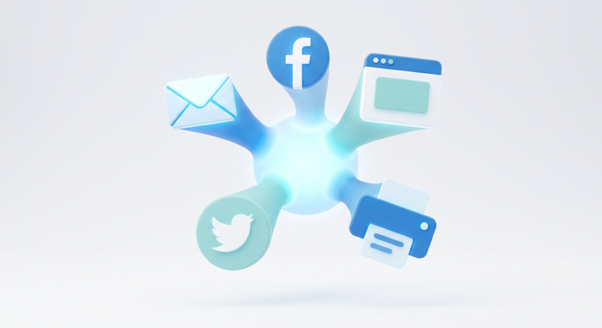
Most brands are not short on marketing activity. They are short on agreement. The website says one thing, the ads say another, the emails read like a different company, and the social feed feels like a fourth business. You are spending in every direction and wondering why none of it adds up. That gap between effort and result is exactly what an integrated marketing campaign is built to close.
Here is the uncomfortable part. Plenty of businesses never quite get there. Marketing teams often believe their campaigns are joined up, while their customers experience something far more fragmented. So if your marketing efforts feel scattered, you are in crowded company. Closing the gap is less about spending more than about getting everything to say the same thing, in the same voice, at the same time.
What is an integrated marketing campaign?
An integrated marketing campaign synchronises all your promotional tools to deliver a consistent message across every channel a customer might touch. Instead of running social media, email, paid advertising, and print ads as separate projects with separate briefs, an integrated approach treats them as one unified campaign built around a single idea.
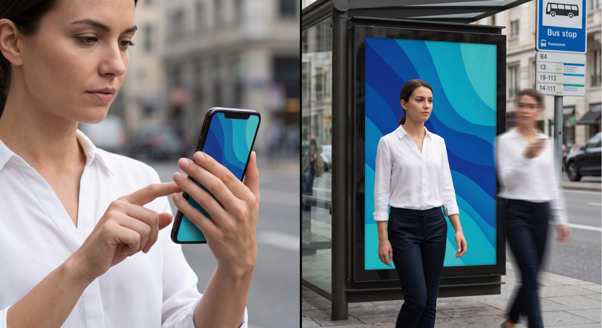
Think about how people actually experience your brand. They do not see channels. They see you. Someone might spot a paid ad on Instagram, get an email a week later, read a blog post through a Google search, then walk past a print advertisement. If each of those moments tells a different story, the brand does not register. When they all reinforce the same unified message, recognition builds fast.
That is the whole point of integrated marketing communication. Every touchpoint carries the same brand message, the same visual identity, and the same promise, which is how a unified brand experience holds together no matter where the conversation starts.
Why does consistent messaging matter so much?
Because trust is built through repetition, and repetition only works when the thing being repeated stays the same. Consistent messaging increases brand recognition and trust among consumers, and that trust is what turns a stranger into a customer. Every time your message lands the same way across different platforms, you build a consistent brand experience that makes it easier for someone to remember you and harder for a competitor to take the spot.
The numbers back this up. Research from Kantar Millward Brown found that integrated campaigns are 31% more effective at building brands than campaigns that are not coordinated. A consistent brand message across your marketing channels also enhances brand authority and credibility, which matters enormously in regulated, high-trust industries where a wobble in tone can cost you more than a sale.
Using multiple channels increases brand visibility and audience reach, and a well-run integrated marketing campaign can improve your return on ad spend by tightening how those channels feed each other. When your paid advertising and your content marketing share the same message and the same customer data, the whole system gets more efficient. That is where a real competitive edge comes from.
What channels belong in an integrated marketing strategy?
Whatever your target audience actually uses. There is no fixed list. A successful integrated marketing campaign uses multiple marketing channels simultaneously, but the right mix depends on where your customers spend attention, not on chasing every platform at once.
Paid, owned, shared, and earned

A helpful way to map it is the PESO model. Integrated marketing combines paid, owned, shared, and earned media into one cohesive strategy. Paid covers paid advertising, direct marketing, and sales promotions. Owned covers your website, your email marketing, and your content. Shared covers social media marketing, from social media engagement to the conversations happening across social media posts. Earned covers public relations, coverage, and the mentions you did not pay for.
The mistake is treating these as four separate budgets run by four separate people. Cross-functional collaboration between marketing and other departments is essential here, because the email, paid, and PR teams all need to work from the same plan. When they are not, you get the disconnected mess most brands live with.
The 4 C's that hold it together
Integrated marketing rests on what practitioners call the four C's: consistency, coherence, continuity, and complementarity. Consistency means the same look and voice everywhere. Coherence means the pieces make sense together. Continuity means the message holds over time rather than lurching with every new quarter. Complementarity means each channel adds something the others cannot, so digital marketing and traditional advertising strengthen each other instead of repeating the same note.
Your unified message should stay recognisable across every platform while adapting to fit each one. A social caption and a print ad will never read identically, and they should not. The brand values underneath them stay fixed. The expression flexes to suit the channel. That balance is what creates a cohesive brand experience rather than a copy-paste one.
How do you plan an integrated campaign that actually works?
Successful integrated campaigns require systematic planning and execution, not a burst of enthusiasm followed by four channels drifting apart. The planning is where most of the value lives, and it is the part brands are most tempted to skip.
Start with your target audience
Effective integrated marketing requires a clear understanding of the target audience, so this comes first, before a single asset gets made. Identify your target audience through proper market research and analysis. Conduct market research into who they are, what they read, which platforms they trust, and what actually moves them. Analysing data you already hold, from your website analytics to your customer feedback, tells you more than any assumption will.
Get this wrong and everything downstream is wasted. Get it right and every later decision, from channel choice to tone, gets easier because you are building for real people rather than a vague category.

FAQ Content
Blueprint
20 ready-to-use FAQ templates for aesthetic and dental clinics, structured for AI answer engines.
- Treatments and procedures FAQs
- Dental treatment FAQs
- Consultations and booking FAQs
- Recovery and aftercare FAQs
- Pricing and payment FAQs
Get the free blueprint
One email.
One PDF. Instant.
Enter your email and we'll send it straight to you.
By submitting your email address you agree to join our newsletter. One click to unsubscribe, anytime.
On its way to your inbox
Check your email — the PDF should arrive within a couple of minutes. Keep reading while you wait.
Download now insteadSet clear, measurable goals
Successful integrated marketing campaigns require clear, measurable goals and objectives. Establish SMART objectives to guide your integrated marketing strategy, meaning goals that are specific, measurable, achievable, relevant, and time bound. "Increase brand awareness" is not a goal. "Increase website traffic by 30% within six months" is the kind of target a hypothetical brand like FitLife might set to keep a campaign honest and accountable.
With the audience defined and the objectives locked, you build the creative and content strategy around one central idea, then adapt it across your various channels. By aligning messaging and visuals, integrated campaigns create a connected customer experience that feels like one conversation rather than a dozen interruptions. Coordinated timing and execution across all channels is what makes an integrated campaign feel deliberate. The email supports the ad, the ad supports the landing page, the social media posts support the launch, and none of it fires in isolation.
What do the results actually look like?
The clearest example is one you have almost certainly held in your hand. Coca-Cola's "Share a Coke" campaign replaced the logo on bottles with people's names and ran that single idea across packaging, television, out-of-home, and social media at once. In the United States, the campaign is credited with lifting US sales by more than 2%, the brand's first rise in over a decade of declining consumption. The idea was simple; the execution was ruthlessly consistent across every channel. That is integrated marketing doing exactly what it promises.
You do not need a global budget to apply the same thinking. A local practice running a unified campaign across email marketing, paid social, and one well-optimised blog post will beat a competitor spending twice as much on scattered, off-message activity. The lesson is not the size of the spend, it is the discipline of one message across many channels.
How do you measure campaign effectiveness?
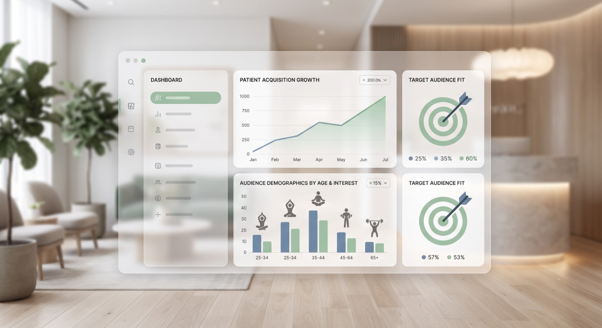
Measurement and optimisation of key performance indicators are essential for integrated campaigns, because a campaign you cannot measure is a campaign you cannot improve. Monitor key metrics to optimise integrated marketing campaign performance throughout the campaign, not just at the end when it is too late to change anything.
Use your analytics tools to track how each channel contributes to the shared goal. Look at brand awareness lift, social media engagement, email performance, and the movement of potential customers through your funnel toward a booked enquiry or sale. The point of analysing data across channels is to see which combinations are working together, since integrated campaigns can improve ROAS specifically by shifting effort toward the pairings that convert. Customer feedback belongs here too: the numbers tell you what happened, the feedback tells you why.
Everything you learn feeds your future campaigns. A single integrated campaign teaches you which channels your audience responds to, which messages land, and where the drop-off happens. That evidence makes the next campaign sharper. Over time, a genuinely effective integrated marketing strategy compounds, building customer loyalty and brand recognition that a series of one-off, disconnected efforts never could.
Integrated marketing ensures your brand shows up as one coherent thing across every platform. It improves the customer experience across multiple touchpoints, it enhances brand authority, and it gives you a measurable, repeatable system rather than a guessing habit. That is a strategic approach worth building your business objectives around.
Ready to make your marketing say one thing?
If your channels are pulling in different directions and your marketing spend is not adding up to real brand recognition, we can help you fix that. ContentClicks builds compliance-first integrated marketing campaigns for regulated healthcare, dental, and aesthetic practices across Australia, the US, and Singapore. Talk to our team about building a campaign that works as one.
Frequently asked questions
How long should an integrated marketing campaign run?
Long enough for continuity to take hold, which usually means months rather than weeks. Recognition is built through repeated exposure, so a campaign that ends after a fortnight rarely gives your audience enough contact to remember the message. Plan in quarters and review at set checkpoints.
Is integrated marketing the same as omnichannel marketing?
They overlap but are not identical. Omnichannel marketing focuses on giving the customer a connected experience as they move between channels, often in real time. Integrated marketing is the broader discipline of coordinating the message, creative, and timing behind those channels in the first place. Multichannel marketing simply means being present on several platforms, which is not the same as being coordinated across them.
How much of my budget should go to each channel?
There is no universal split. It depends on where your target audience actually pays attention and what your market research shows. The better question is not how to divide the budget evenly, but which combination of channels moves your specific audience toward the goal you have set.
Can a small business run an integrated campaign?
Yes, and often more easily than a large one. Fewer teams means fewer places for the message to fracture. A small practice with a tight brand identity and three well-coordinated channels can build a cohesive brand experience faster than a corporation wrestling with a dozen departments.
Do you need expensive software to run an integrated marketing campaign?
No. The coordination matters far more than the technology. A shared campaign brief that every channel works from, a simple calendar so the timing lines up, and one agreed place to check results will carry you most of the way. Paid platforms earn their keep once you are running at scale, but plenty of tightly joined-up campaigns run on tools the team already has.
References
- Esterl, M. (2014, September 25). 'Share a Coke' credited with a pop in sales. The Wall Street Journal. https://www.wsj.com/articles/share-a-coke-credited-with-a-pop-in-sales-1411661519
- Improvado. (n.d.). Integrated marketing communications (IMC): A complete guide. Retrieved July 14, 2026, from https://improvado.io/blog/integrated-marketing-communications
- Kantar Millward Brown. (2018). AdReaction: The art of integration. The A-List Daily. https://www.alistdaily.com/strategy/integrated-marketing-campaigns-study/
- Monash University Business School. (n.d.). Integrated marketing communication (IMC). Marketing Dictionary. Retrieved July 14, 2026, from https://www.monash.edu/business/marketing/marketing-dictionary/i/integrated-marketing-communication-imc

About the author
Matthew Roberts · CEO & Co-Founder, ContentClicks
Matthew is the CEO and co-founder of ContentClicks, a content marketing agency built for healthcare practices. He spent fifteen years as an operations and transformation executive inside some of the world's largest regulated organisations, leading teams of more than 5,000 people, and built ContentClicks around an operating model with measurement and compliance at its centre. He holds a Master's degree in Agile Project Management from the University of South Australia, where he graduated as class valedictorian. More from Matthew.