May 14, 2026 · 4 min read

On Friday evening, the US government ordered Anthropic to cut off access to its two most capable AI models. By the end of the night, both were gone. The models were switched off completely, for every customer, including the hundreds of millions of people who had been using the public version earlier that week.
Here is what happened. The Commerce Department issued an export control directive telling Anthropic to block any foreign national from using Fable 5 and Mythos 5, its newest and most powerful systems. Anthropic had no reliable way to check the nationality of every user in real time, so rather than attempt a partial block it disabled the models for everyone. As far as anyone can tell, this is the first time a leading AI company has taken a live, publicly available model offline because the federal government told it to. Anthropic says it disagrees with the order and believes it came from a misunderstanding. That does not change the fact that the models went dark the same night, with no notice to the people relying on them.
The trigger had nothing to do with marketing. This was a national security story about cybersecurity capability and who gets to access it. So why should you, running a clinic or a small business in Melbourne or Sydney, care about a fight between Anthropic and Washington?
Because of how it happened, not what it was about.
- On 12 June 2026 the US Commerce Department ordered Anthropic to block foreign nationals from its Fable 5 and Mythos 5 models, and Anthropic took both offline for everyone rather than risk a partial block.
- The trigger was national security, not marketing, but it shows that an AI tool your marketing depends on can be switched off by a decision you do not control.
- Platform dependence has wiped out businesses before. After Google’s Helpful Content Update, 78% of 671 travel publishers studied lost organic traffic and some sites shut down.
- A full-service agency spreads the work across tools and keeps strategy, brand voice and compliance with people, so one model going dark does not stop your marketing.
The AI you depend on is a decision you do not control
If your marketing runs on a single AI tool, you just watched a dress rehearsal for your own outage. The model you build your week around can disappear because of a decision made in a room you will never sit in, for reasons that have nothing to do with your business, with no warning and no one to call. On Friday it was an export control order. Next time it could be a pricing change, a new rule about what the model will and will not write for a cosmetic or medical business, a capacity limit during your busiest period, or a government in any of the three countries we work across deciding something is off limits.

This is not a new kind of risk. Businesses have been burned by platform dependence for years. The clinic that built its entire reach on one social platform and lost it overnight when the algorithm changed. An ad account suspended by an automated email with no human to appeal to. After Google’s Helpful Content Update, one analysis of 671 travel publishers found 78% of them lost organic traffic, with many losing more than 90% of it. The Planet D, a travel blog running since 2008, lost half its traffic when Google launched its AI Overviews, then most of what was left, and has since stopped publishing. AI is now the same kind of dependency, with one difference. The off switch is also wired to regulation and geopolitics now, which makes it less predictable than anything that came before it.
What this means for a small business, especially in healthcare
Most businesses that lean on AI for marketing have the same setup. One person on the team runs everything through one tool. The blog posts, the ad copy, the emails, maybe the images. It works well enough that nobody questions it. The whole pipeline sits behind a single login.
You are not unusual if this sounds familiar. About 94% of marketers say they will use AI in their content creation this year, according to HubSpot’s 2026 State of Marketing report, and the share of all marketing work handled by generative AI more than doubled in twelve months, from 7% to about 15%, in The CMO Survey run by Duke University with Deloitte and the American Marketing Association. The dependency is already deep, and for most businesses it is still growing.
That is fine right up until the moment it is not. When the tool changes, gets throttled, or gets pulled, the work stops. And there is usually no backup, because the tool was never part of a plan. The tool was the plan.
For our clients this is sharper than for most. A plastic surgeon, a cosmetic dentist, an aesthetic clinic. The content these businesses publish has to meet advertising rules from AHPRA in Australia and equivalent bodies in the US and Singapore. An unsupervised model writing patient claims is not a convenience, it is a liability waiting to be found. When that same model turns out to be something a regulator can switch off without notice, the case for building your marketing on it alone gets very thin.
Why a full service agency holds up when a single tool does not

We use the best technology available on your behalf, and we would be negligent if we did not. AI runs through how we write, research, design and report, because the alternative is handing you slower, weaker work than your competitors are already getting. Using it is the easy part. The difference is in the structure we build around it.
We do not bet the work on one model. If one system goes offline, the work moves to another and your campaigns keep running. The strategy, your brand voice and the compliance knowledge that keeps your content safe all live with people on the team, not inside one model’s weights, so a model going dark does not take any of that with it. There is a team accountable for the work landing on time no matter what any single tool is doing that week, which means when something breaks you have someone to ring, not an automated reply. And for regulated work, a person carries responsibility for every claim that goes out, with a verification step a model cannot do for you.
AI is one instrument in that system, and a powerful one. But it sits inside a setup with redundancy and human oversight, instead of being the single point that everything else depends on.
This is not an argument that AI is dangerous or that you should stop using it. It is an argument about concentration risk, which is most of what I think about as a technology lead. You should never build something you depend on for revenue on top of a single resource you do not control and cannot replace quickly. The businesses that were fine on Saturday morning were the ones that were not betting everything on one model. Their marketing kept moving because it was never resting on a switch that someone else could flip.
If your marketing would stop the day your AI tool went offline, that is worth fixing now, while it is still a hypothetical.
Frequently asked questions
Why did the US government make Anthropic take its AI models offline?
On 12 June 2026 the US Commerce Department issued an export control directive ordering Anthropic to block any foreign national from using its Fable 5 and Mythos 5 models, on national security grounds tied to the models’ cybersecurity capability. Anthropic could not screen every user’s nationality in real time, so it disabled both models for all customers. Anthropic has said it disagrees with the order and expects to restore access.
Does this affect the AI tools I use for my marketing?
Not directly, because the order targeted two specific frontier models rather than everyday marketing tools. The point for marketers is the precedent. It shows that the AI you build your work on can be removed by a decision you have no say in, with no notice, which is a risk worth planning around.
What is concentration risk in marketing?
Concentration risk is what you carry when your marketing depends on a single tool, platform or channel you do not control. If that one thing changes its rules, its pricing or its availability, your output stops. Spreading the work across several tools and keeping your strategy with people reduces it.
Should I stop using AI for my marketing?
No. AI is now part of how good marketing gets done, and avoiding it would leave you slower than your competitors. The safer approach is to use it inside a system that has backups and human oversight, rather than running your whole pipeline through one model.
How does a full-service agency reduce the risk of relying on AI?
An agency spreads the work across more than one model, so if one goes offline the work moves to another. Your strategy, brand voice and compliance knowledge stay with the team rather than inside a tool, and someone is accountable for the work landing on time whatever any single tool is doing that week.
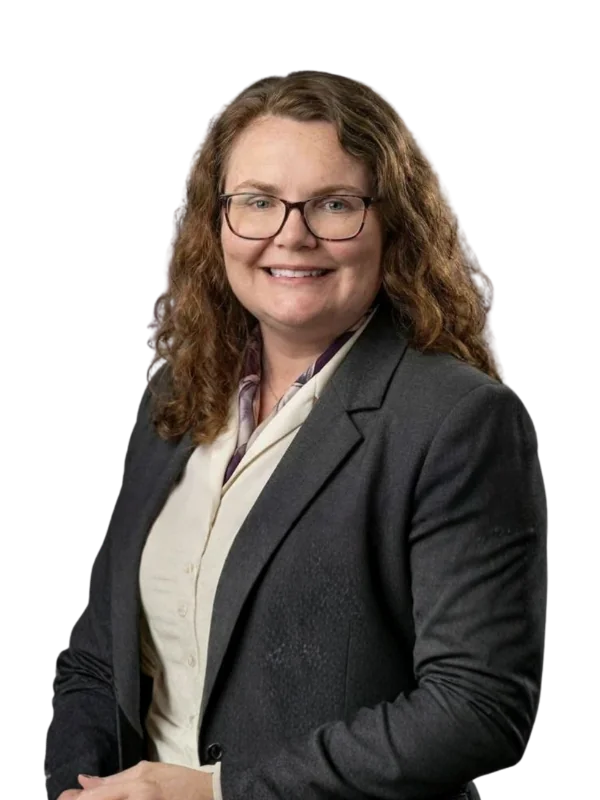
Evie Hamilton is Head of Technology at ContentClicks, where she leads the agency’s infrastructure, automation and AI systems across its work with plastic surgeons, cosmetic dentists and aesthetic clinics in Australia, the US and Singapore. Read more from Evie.
Sources
- “Anthropic suspends new AI models after government directive,” NBC News, 12 June 2026. nbcnews.com
- “Anthropic suspends all access to Mythos model after US government bans foreign nationals’ use,” CNN Business, 13 June 2026. cnn.com
- “US orders Anthropic to disable AI models for all foreign nationals,” Al Jazeera, 13 June 2026. aljazeera.com
- “2026 Marketing Statistics, Trends & Data” (State of Marketing Report), HubSpot. hubspot.com/marketing-statistics
- The CMO Survey, Duke University Fuqua School of Business with Deloitte Digital and the American Marketing Association. cmosurvey.org
- “The Impact of Google’s Helpful Content Update on Travel Publishers,” Digitaloft. digitaloft.co.uk
- “The AI Search Reckoning Is Dismantling Open Web Traffic,” AdExchanger, January 2026. adexchanger.com