Dr Sandy Adel
April 5, 2026 · 5 min read

Most cosmetic clinics hire a marketing agency and ask one question: are we ranking? It is a fair question. Rankings have mattered for years, and in many ways they still do.
But if that is the only question your agency knows how to answer, you may be paying for a strategy that is already falling behind the way patients actually search.
Patients researching anti-wrinkle treatments, rhinoplasty, or body contouring are increasingly bypassing the list of search results entirely. They open ChatGPT, Perplexity, or Google’s AI Overviews and ask a direct question. They get a direct answer. Sometimes a clinic is named in that answer. Often, it is not the clinic with the best Google ranking.
That gap is worth understanding before your next marketing retainer rolls over.
Search engine optimisation built around keywords works by identifying the terms patients type into Google and making sure your pages rank for them. Done well, it brings consistent organic traffic. Done poorly, it fills your site with content that sounds like it was written for an algorithm rather than a person.
The deeper issue is structural. Keyword-based SEO was designed for a specific type of search behaviour: someone types a short phrase, gets a list of results, clicks a link, and browses a page.
That behaviour has not disappeared, but it has changed. A growing segment of patients, particularly those in higher-income brackets making considered cosmetic decisions, now use AI tools for the research phase. They ask longer, more specific questions and expect a direct answer rather than ten options to evaluate.
Keyword rankings do not tell you whether your clinic is appearing in those answers. Neither does organic traffic, bounce rate, or most of the other metrics a standard marketing report contains.
If your agency is not measuring AI visibility and structuring your content to support it, you have a genuine blind spot in your marketing performance.

Cosmetic medicine marketing operates within strict advertising frameworks. Any agency working in this space needs to understand them as a baseline, not an afterthought.
In Australia, AHPRA sets out clear rules for cosmetic practitioners: no patient testimonials, no before-and-after images used in advertising, and no unverifiable claims about outcomes. The TGA adds further requirements for any content referencing therapeutic devices or products.
In Singapore, the Singapore Medical Council and MOH guidelines govern how cosmetic medical services can be presented to the public, with the HCSA providing the broader regulatory structure.
In the United States, the FTC and FDA set the standards for truthful advertising in cosmetic medicine, with additional state-level requirements that vary by procedure type.
These are not optional considerations. An agency that produces non-compliant content for your clinic exposes your practice to regulatory risk, regardless of how well the content ranks.
The other thing worth knowing: compliance and content quality are not in tension. Accurate, measured, procedure-specific content that avoids absolute claims is also, as it happens, exactly the kind of content AI tools are more likely to treat as credible and cite in their answers.
If your current agency does not understand the regulatory environment your clinic operates in, that is the first problem to solve.
You do not need to become an expert in AI search to manage your agency effectively. You do need to ask the right questions and know what a good answer looks like.
A capable agency will be able to explain the difference between ranking for a keyword and being cited in an AI-generated response, and they will have a plan for both. If the answer is a vague reference to “staying up to date with algorithm changes,” that tells you something important.
The shift toward AEO is fundamentally about content depth. Patients researching a rhinoplasty do not just want to know that you offer the procedure. They want to know what recovery involves, how long swelling lasts, what makes a good candidate, and what to look for in a surgeon. If your site does not answer those questions clearly, it will not be cited by an AI tool when a patient asks them.
Author attribution matters in AI search. Content attributed to a named, qualified practitioner with their registration details and areas of expertise carries more weight than unsigned blog posts or generic clinic copy. A good agency will have a process for this.
Schema markup, Google Business Profile accuracy, and consistent name, address, and phone number data across directories all affect how AI tools identify and reference your practice for location-specific queries. This is technical work, but it is not complicated, and any competent agency should have it covered.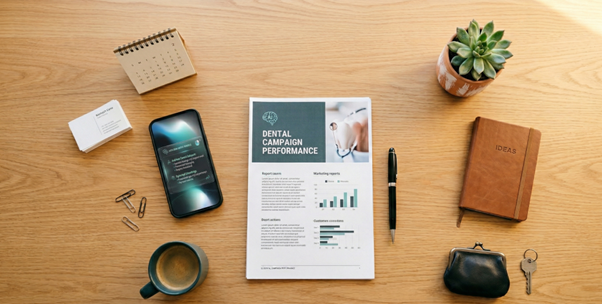
An agency that understands the current environment will be doing a few things consistently.
They will be building content around patient questions, not just keyword clusters. They will be structuring procedure pages to function as genuine information resources rather than sales pages with a thin paragraph of copy. They will be attributing content to qualified practitioners and ensuring your schema markup accurately represents who you are and where you practise.
And they will be monitoring your visibility in AI tools, not just your position on page one of Google.
This is not a complete departure from traditional SEO. Technical site health, indexability, and organic rankings still matter. But the content layer has changed, and a cosmetic clinic that produces detailed, compliant, well-attributed content now is building visibility in a channel that most of its competitors have not taken seriously yet.
That window will not stay open indefinitely.
ContentClicks works with cosmetic clinics across Australia, Singapore, and the United States to produce compliant, AEO-optimised content that performs in both traditional search and AI-generated answers. If you want to know whether your current marketing is built for how patients are actually searching, get in touch with the team at ContentClicks.

Technology partners