
The Channel That Keeps Paying: Why Brands Are Betting Bigger on Email Marketing Than Ever


Fifteen years working with data systems across telecommunications and enterprise IT teaches you one thing quickly: the tools that survive are the ones that keep producing returns long after the hype cycle moves on. Most technologies do not pass that test. Email marketing does, and the numbers behind it right now are frankly hard to argue with.
At ContentClicks, helping brands get more out of their email marketing technology is core to what we do. So when we look at what is happening in this space in 2026, we are not just reading the trend reports out of curiosity. We are watching what is working for the businesses we work with, and the picture is genuinely exciting.
The Return on Investment That Other Channels Struggle to Touch
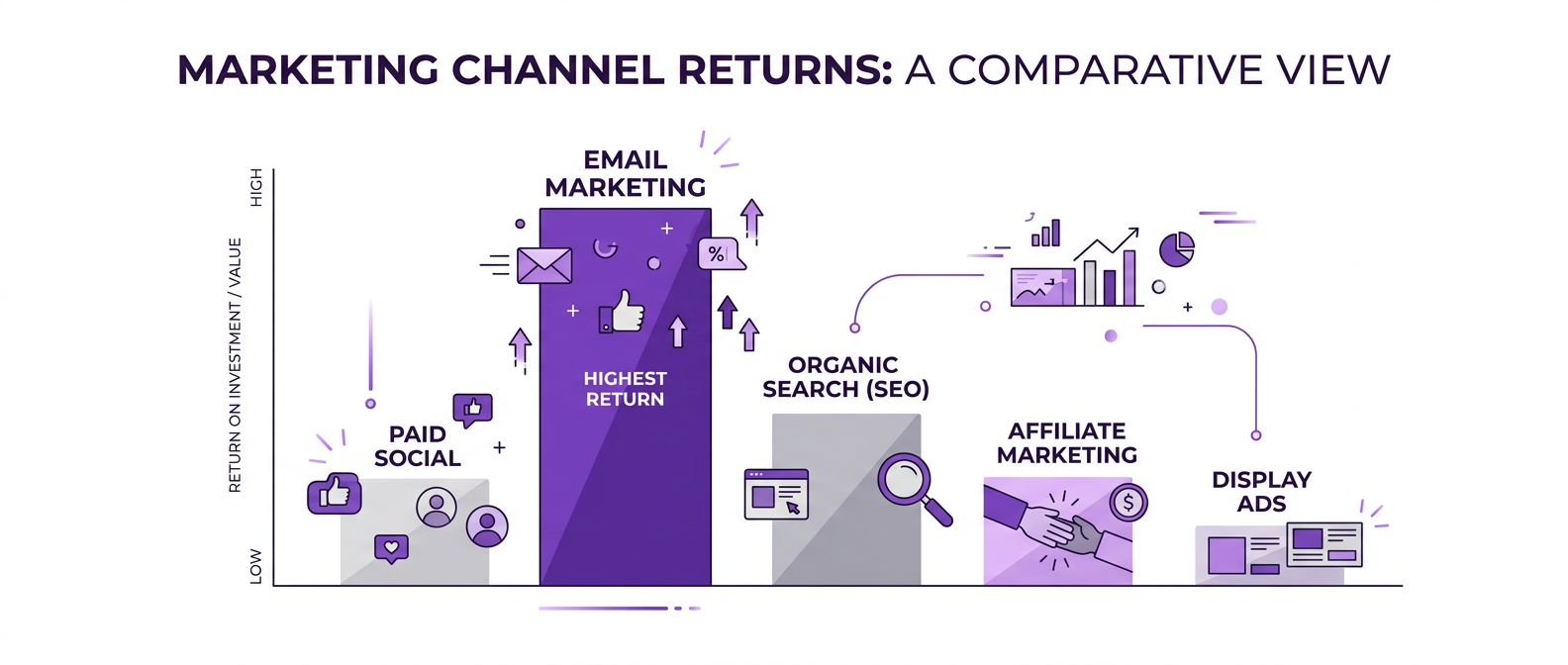 Email marketing generates between $36 and $42 for every dollar spent (Email Monday). That is a 3,600% to 4,200% return. Nearly one in five companies report hitting $70 back for every dollar in (Litmus). For context, the average return on paid social sits somewhere between $2 and $5 per dollar, depending on the platform and the sector.
There is a version of this conversation where those numbers get dismissed as legacy marketing thinking, the kind of stat that gets recycled in agency decks. But the 2025 data keeps confirming it. Omnisend reports its US clients are generating an average of $79 per dollar spent (Omnisend). HubSpot’s 2025 State of Marketing report found that segmented email campaigns produce 30% more opens and 50% more click-throughs than their non-segmented equivalents (Hubspot).
The reason email keeps performing while other channels plateau comes down to something that anyone who has spent time in data infrastructure will recognize immediately: ownership. When a brand builds an email list, it owns that relationship. There is no algorithm deciding how many subscribers see a given message. There is no platform changing its business model overnight and cutting organic reach in half. The data belongs to the brand, and so does the channel.
What Happens When You Add Behavioral Data to the Mix
 Here is where it gets interesting, and where the shift happening right now in email marketing technology is genuinely significant.
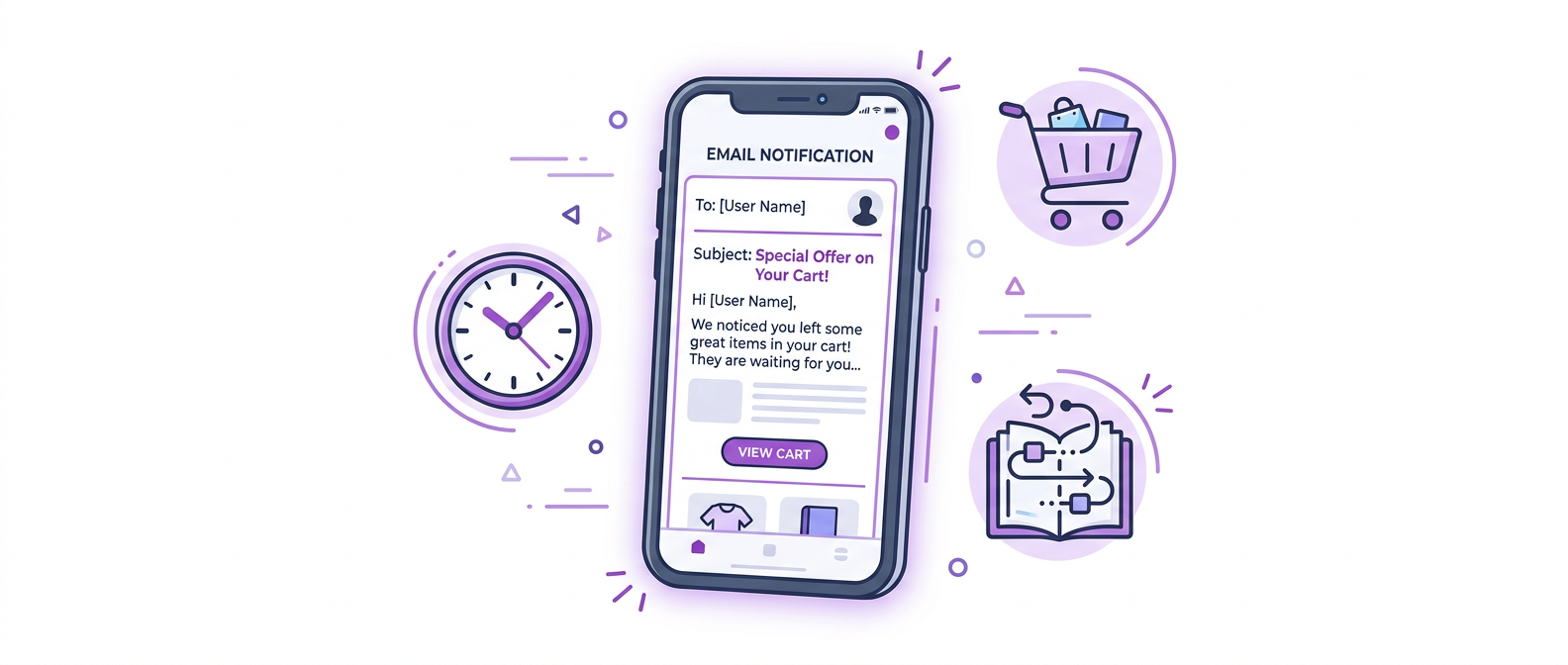
For most of email marketing’s history, personalization meant putting a first name in the subject line. That era is over. The platforms available today, particularly at the more sophisticated end of the market, are capable of building send strategies based on individual customer behaviour: what someone browsed, what they added to a cart and left, how long it has been since their last purchase, and which product categories they engage with most. The email a subscriber receives is not just addressed to them. It is built around them.
The data on what this does to performance is substantial. Personalized emails achieve open rates of around 29% (Genesys Growth), compared to the industry average sitting closer to 18%.
Stitch Fix built an AI-driven recommendation engine that analyses over 85 data points per customer. The result was a 30% increase in email-driven revenue (eTail West). Amazon’s AI-powered email campaigns delivered a 25% increase in email revenue alongside a 20% improvement in customer retention (Done For You). These are not small businesses with easy-to-move baselines. These are organizations processing enormous volumes of customer data, and email is still one of their highest-performing channels.
What changed for them, and what is now accessible to businesses of almost any size, is the ability to act on behavioral signals at scale. When a customer browses a product three times without buying, the system knows. When a subscriber’s engagement starts to drop off, the platform can trigger a re-engagement sequence before they unsubscribe. The email arrives at the right moment, with the right message, without a human having to manually identify every individual it should go to.
Why 2026 Is a Particularly Good Time to Invest
 The platforms available to brands right now are genuinely more capable than they were two years ago, and the gap between what you can do with a well-configured email marketing setup and a basic one has widened considerably.
AI-assisted campaign building has compressed production timelines significantly. Marketing teams that used to spend two weeks producing a single email are now doing it in a fraction of that time. Subject line testing, copy variations, send time optimization, and audience segmentation are all areas where the tooling has improved to the point where it handles the analysis and the brand handles the creative direction.
For businesses that have not yet built out a proper email marketing setup, the opportunity cost of waiting is growing. The businesses that invest in getting their flows, segmentation, and data infrastructure right now are going to be progressively harder to catch for those that do not.
The global email user base hit 4.6 billion people by the end of 2025 (Email Tool Tester). That is 58% of the world’s population reachable through a channel that costs a fraction of a cent per send. The brands using it well are not treating it as a broadcast medium. They are treating it as a one-to-one conversation at scale, powered by twelve months of behavioral data on every person in the list.
The Gap Between Average and Good Is Bigger Than Most Brands Realize
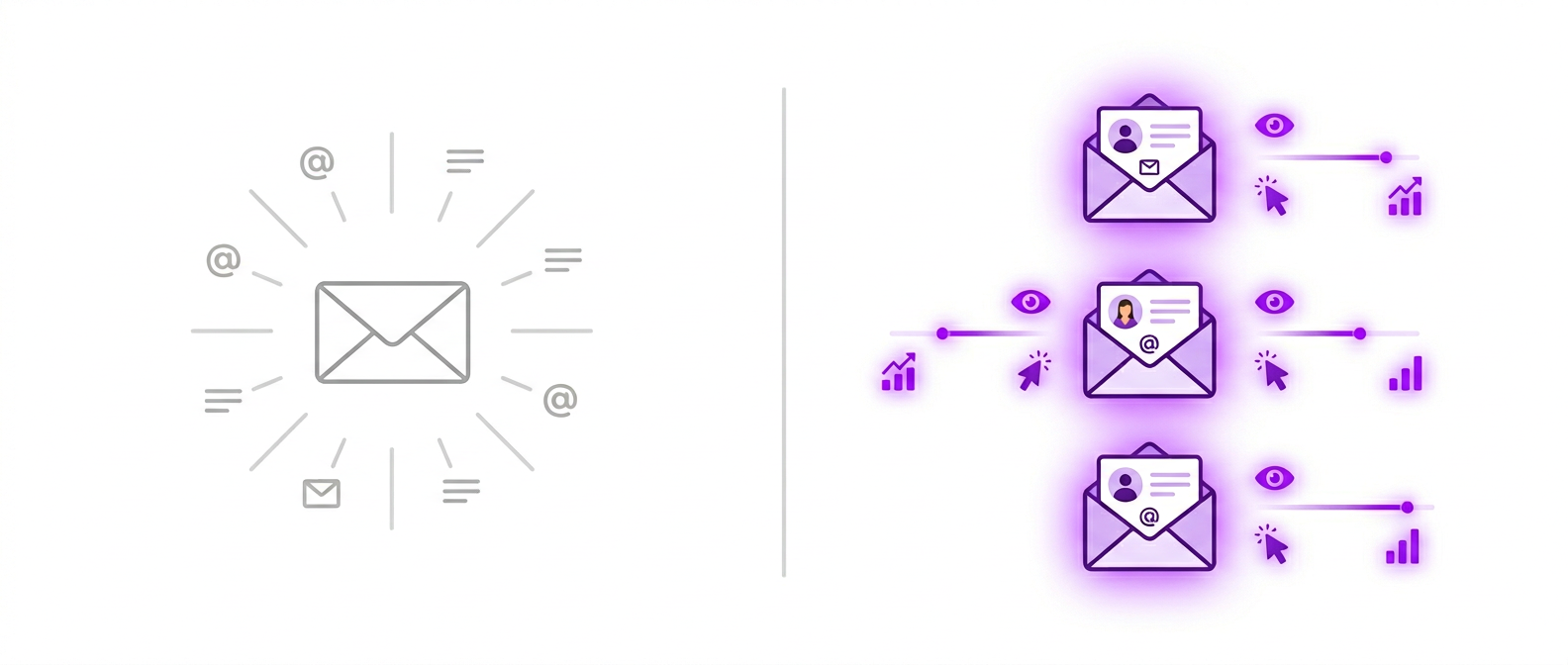 This is the part I find most compelling from a data perspective. The average metrics for email marketing are already strong. But when you break down the performance gap between brands using basic tools and brands running properly segmented, behaviorally triggered campaigns, the difference in revenue impact is significant enough that it represents a major commercial opportunity for businesses willing to close it.
A 2% conversion rate on a campaign to 100,000 subscribers at a $50 average order value generates $100,000 from a single send. Improving the segmentation and timing of that campaign by 20% adds $20,000 without increasing the list size or the sending cost.
The brands getting those results are not necessarily the biggest ones. They are the ones that took the time to set up their platform properly, connect it to their customer data, and build out the automated sequences that keep working in the background after the initial setup is done.
What We Do at ContentClicks
We work with businesses at every stage of that journey, from brands setting up their first automated flow to established operators who want to pull more revenue out of a platform they have been underusing.
My background is in pulling insight out of data systems, which turns out to be directly applicable to email marketing. The difference between a campaign that converts and one that does not is usually buried in the data: which segment received the message, at what point in their customer journey, and whether the content matched where they actually were rather than where the brand assumed they were.
If you are not yet using email marketing technology, or you are using it but not seeing returns that look anything like the figures in this piece, that gap is very likely closeable. It is rarely about the list size. It is almost always about what is being done with the data attached to it. Contact us if you’d like some help with your strategy now.
Evie is the Head of Technology of ContentClicks, a marketing consultancy. She holds a degree in Computer Science, has 15 years of experience in Data Analysis, Marketing Technology and Telecommunications IT, and is currently completing further studies in Cyber Security.


